






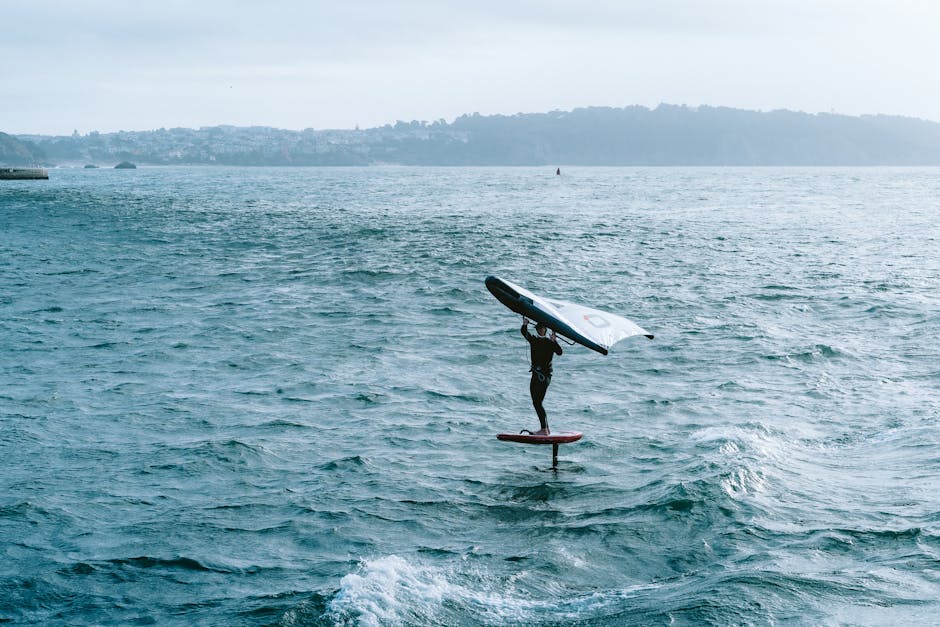
In the realm where air meets water, a new sensation has taken flight – wing foiling. Born from the marriage of windsurfing, kiteboarding, and paddleboarding, this exhilarating sport has soared into the hearts of water enthusiasts worldwide. Combining the grace of sailing with the agility of surfing, wing foiling offers an unparalleled experience that transcends traditional water sports. Let’s embark on a journey to explore the essence of wing foiling – its origins, mechanics, equipment, and the sheer thrill it imparts.
Origins and Evolution
The genesis of wing foiling can be traced back to the windsurfing and kiteboarding communities. Surfers and sailors sought a means to harness the wind’s power more dynamically, leading to the development of lightweight, handheld wings. These wings, reminiscent of paragliding canopies, provided the lift needed to glide effortlessly across the water’s surface.
As technology advanced, wing foiling emerged as a distinct discipline, blending elements from its predecessors while carving its path. What distinguishes wing foiling is its simplicity – no cumbersome rigging or complicated setups. With just a foil board and a compact wing, riders harness the wind’s energy to propel themselves across oceans, lakes, or even rivers.
Mechanics of Flight
At the heart of wing foil lies the delicate interplay between wind, water, and board. The wing, akin to a sail, catches the wind’s force, generating forward momentum. Meanwhile, the rider balances atop a hydrofoil-equipped board, which minimizes drag and elevates the experience to new heights – quite literally.
The foil beneath the board acts as a wing beneath the water’s surface, lifting the rider above it with astonishing efficiency. This hydrodynamic marvel allows for smooth, gliding motion, akin to floating on air. Mastery of balance and technique is crucial, as subtle shifts in weight and wing control dictate the fluidity of movement.
Equipment Essentials
Central to the allure of wing foiling is its minimalist equipment requirements. A foil board, typically shorter and wider than traditional surfboards, provides stability and buoyancy. Its hydrofoil, composed of a mast and wings, enables lift and propulsion, essential for achieving flight.
Complementing the board is the wing itself – a compact yet powerful sail-like apparatus. Crafted from lightweight materials such as dacron and mylar, wings come in various sizes to accommodate different wind conditions and rider preferences. Their ergonomic design and intuitive handholds allow for precise control, empowering riders to navigate with finesse.
The Essence of Flight
To experience wing foiling is to commune with the elements – to dance upon the wind and waves in harmonious union. The sensation of gliding effortlessly across the water, propelled solely by nature’s breath, is nothing short of transcendent. Each maneuver becomes a symphony of movement, orchestrated by the rider’s intuition and skill.
The Thrill of Progression
Like any skill-based pursuit, wing foiling rewards dedication and perseverance. From mastering the basics of balance to executing advanced aerial maneuvers, the learning curve is as exhilarating as it is rewarding. Every session presents an opportunity for growth, as riders push their limits and unlock new dimensions of performance.
Yet, amidst the quest for mastery, there remains an inherent humility – a recognition of the boundless complexity and beauty of the natural world. Wing foiling instills a sense of reverence for the elements, fostering stewardship and appreciation for the fragile ecosystems we inhabit.


Wellness Travel and Retreat Destinations: Rejuvenate Your Mind, Body, and Soul
Wellness travel has evolved into one of the most meaningful ways to explore the world while prioritizing physical health, mental...

Travel: An In-Depth Guide to Exploring the World
Travelling has always been one of the most enriching experiences a person can have. It allows you to step outside...

Exploring the Charms of Paris: A Comprehensive Guide for Travelers
Paris, often referred to as the "City of Light," is one of the most enchanting destinations in the world. Its...

How to visit Edinburgh?
Edinburgh is the capital of Scotland and the second largest city (after Glasgow) with a population of 500,000. The city...