






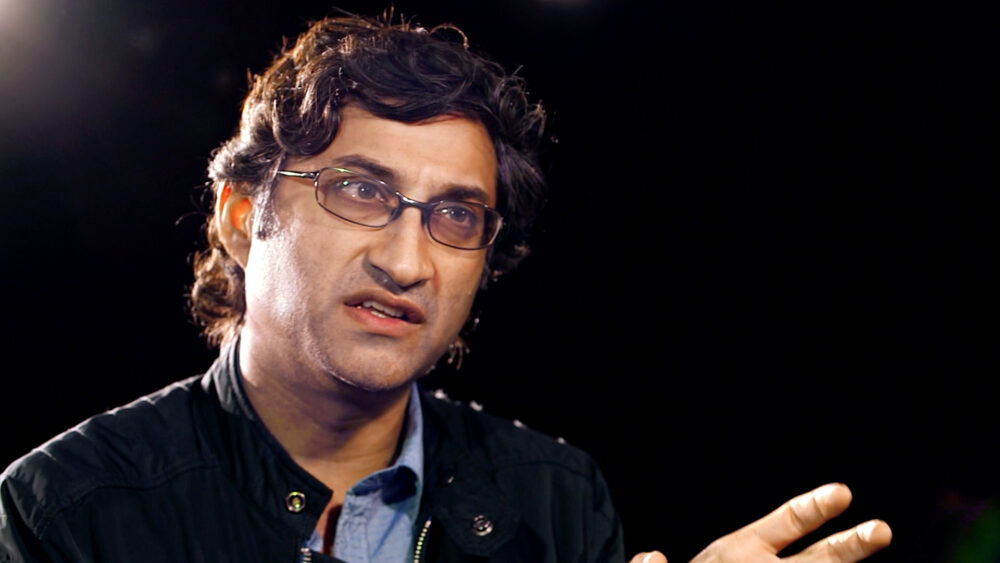
Through a career spanning over two decades, filmmaker Asif Kapadia has firmly established himself as an influential voice in contemporary cinema. His distinctive storytelling style merges meticulous archival research with innovative visual techniques, creating powerful, often haunting narratives that captivate and challenge audiences. Kapadia’s method of intertwining fact with fiction reaches its pinnacle in his latest film, 2073, a thought-provoking exploration of global authoritarianism and environmental catastrophe.
Kapadia first gained critical acclaim with the release of The Warrior, his visually arresting drama starring the late Irrfan Khan. This film set a high bar for his subsequent works, demonstrating Kapadia’s ability to craft visually compelling narratives that resonate emotionally and thematically. From there, his journey into documentary filmmaking began, profoundly redefining the genre with his unique approach that prioritized immersive visual storytelling over conventional narrative techniques.
His groundbreaking documentary Senna introduced the world to his archival-driven methodology, creating a sense of immediacy and intimacy through carefully edited historical footage. Rather than rely on traditional talking-head interviews, Kapadia employed raw, authentic recordings to recount the life and legacy of racing legend Ayrton Senna. This choice not only intensified the emotional impact but also established Kapadia’s style as deeply innovative within the documentary sphere.
Kapadia’s subsequent film, Amy, which documented the life of singer Amy Winehouse, further advanced his visual storytelling techniques. Using extensive private recordings, archival footage, and candid interviews, Kapadia constructed a poignant portrait of Winehouse that went beyond public perception. This film was notable not only for its artistic achievements but also for how Kapadia’s meticulous visual arrangement and narrative pacing transformed audiences’ understanding of the late singer, earning numerous accolades, including an Academy Award for Best Documentary.
In Diego Maradona, Kapadia turned his visual and archival expertise to the turbulent life of the iconic footballer. This film pushed further into uncharted documentary territory, narratively framed as a gangster epic to reveal the complex personality and contradictions of Maradona. Kapadia’s use of previously unseen footage allowed for a deeper exploration of fame, public expectation, and personal downfall, reinforcing his reputation for powerful, empathetic storytelling.
With 2073, Kapadia has entered perhaps his most ambitious cinematic phase yet. Here, he creatively integrates real-world documentary material into a speculative, dystopian context. Kapadia employs news footage, mobile recordings, and social media content from around the globe, juxtaposed with futuristic fictional scenarios, creating a powerful commentary on contemporary political and environmental crises. The result is a film that not only challenges the boundaries between documentary and fiction but also confronts viewers with urgent reflections about the world they inhabit.
A key element of Kapadia’s filmmaking success lies in his ability to innovate technically as well as narratively. For 2073, he worked closely with editor Chris King and cinematographer Bradford Young, employing state-of-the-art LED stage technology to seamlessly blend dramatic and archival footage. This approach enhanced the film’s visual coherence, allowing Kapadia to depict speculative scenarios convincingly, thereby heightening the emotional resonance of his cautionary tale.
The response to 2073 across different international screenings highlights the universal relevance of Kapadia’s visual narratives. Audiences at festivals, such as the Istanbul Film Festival, have expressed profound emotional reactions, prompted by the recognition of current global issues reflected in the film’s speculative imagery. Kapadia’s strategic use of familiar, contemporary visuals to portray future scenarios provides an unsettling yet impactful experience that encourages audiences to reflect critically on the present.
Through each of his works, Kapadia’s consistent emphasis on visual authenticity and emotional depth continues to define his cinematic legacy. His careful archival curation, combined with his innovative narrative methods, exemplifies a new model of filmmaking that is both emotionally impactful and intellectually stimulating. Asif Kapadia’s films, especially the challenging and provocative 2073, stand as powerful reminders of cinema’s unique capacity to blend reality and imagination, transforming visual storytelling into a compelling call for awareness and action.


Dental SEO Marketing Explained by Leading Consultant
The important point is not simply ranking higher than another local dental practice. Search performance affects how a practice is...

The unexpected hero of your repair adventures
Have you ever been in the middle of a project and wondered where to get that one specific part? Or...

Online Businesses That Require Minimal Skills
Starting an online business no longer requires advanced technical knowledge or large investments. Many digital opportunities today allow beginners to...

Asif Kapadia and the Boundaries of Documentary
Few filmmakers have altered the landscape of nonfiction cinema as profoundly as Asif Kapadia. His career has been built on...